
Greetings everyone! As mentioned before, one of my favorite home brews is a honey porter that drinks well on its own, but also serves as a great companion to every dish served hot. That includes everything from my homemade chili to Thanksgiving turkey. This quickly became my ‘Holiday’ beer every year since that first batch.
Let’s get started!
First up, the Grains you need for a delicious Honey Porter:
- 7lbs Alexander LME – Pale
- 1/2lb Honey Malt
- 1/4lb Crystal 120L
- 3/4lb Chocolate Malt
- 1/2lb Black Malt (Carafa III)
The Hops:
- 2oz Willamette pellets
Additional Ingredients:
- ¾ cup Bottling Sugar
Directions:
- To get started, you have to heat three gallons of water to 160°F. As your water heats up, place your grains into a grain bag. (You may want to grab an energy drink, this is going to be long set of instructions. The end result is worth it, however.)
- Once your thermometer shows 160°, remove your brew pot from the heat. If you are outside, turn off your burner and leave your brew pot in place. Place your loaded grain bag in the pot and let your grains steep in the hot water for 30 minutes.
- Next, sparge the grains. If you’re unfamiliar with the term, it means to rinse the grains thoroughly to get all of the sugars possible out of them. Use about two quarts of water, and squeeze the bag lightly throughout the process. It takes about 10-15 minutes to properly sparge the grain bag.
- Now, add 1oz of the Willamette Hops to a Hops bag and put it in the brew pot. Turn the heat back on and bring your contents to a boil. Let it boil for 45 minutes, then add the other ounce of hops and let the contents boil for another 15 minutes. Then, turn off the heat and cover the pot. Let it sit for five minutes.
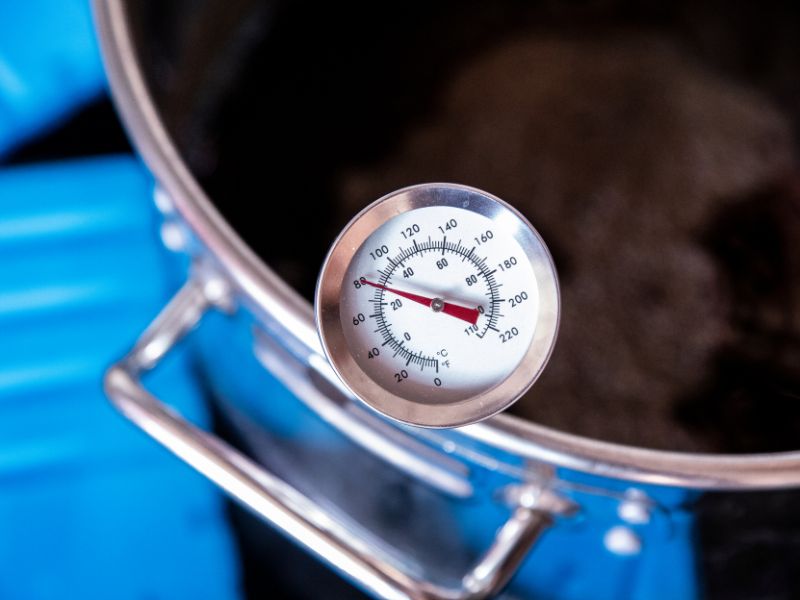
- Cold break what is now your wort with a chiller device or place the pot in the sink and surround the sides with ice. If you are outside, you can also use a combination of a chiller and placing the brew pot in a quarter wood barrel. As with the sink, surround the brew pot with ice. Watch your thermometer, but leave the brew pot alone until you get the temperature of the wort below 85°F.
- Hey! Pay Attention! We’re almost done! I warned you this was a long set. Grab another energy drink, available in every Commissary around the world.
- Next, carefully siphon your wort into a fermenter. Add water until you have a total of 5.5 gallons. Then, add yeast to the wort and then aerate it (stir carefully). You do not want to mix the yeast into the wort, but you do want to spread it out over the surface as much of it as possible. Cover the fermenter (I use a food-grade bucket) and store at 70 degrees for five days minimum, no more than seven. If you have space in a cool, dark closet in the middle of your residence, that is ideal if you do not have a temperature-controlled storage cabinet.
- After five to seven days, rack your wort into a carboy and let it clear for at least another four days, no more than seven. The term rack simply means to transfer the wort. The best way to do this is use a length of plastic tubing and a siphon to move the wort. Place your fermenter on a table or counter and the carboy on the floor. This set-up uses gravity to do the work, allowing you to keep a better eye on the fermenter and prevent sediment from the wort getting into the carboy.
- Equipment Note: When racking, make certain your tubing is food-grade. This means it is a higher quality than the tubing you can buy at a hardware store or a craft shop, and is safe for wort, soup, smoothies, etc.
- Okay, grab your ¾ cup of bottling sugar and dissolve it in 1.5 cups of water. Boil the mixture for 15 minutes. Carefully pour it into a bottling bucket and then rack your clear beer on top of it. Your bottling bucker is another food-grade bucket with a spigot that allows you to bottle the beer. If the beer is warm, allow it to cool to room temperature.
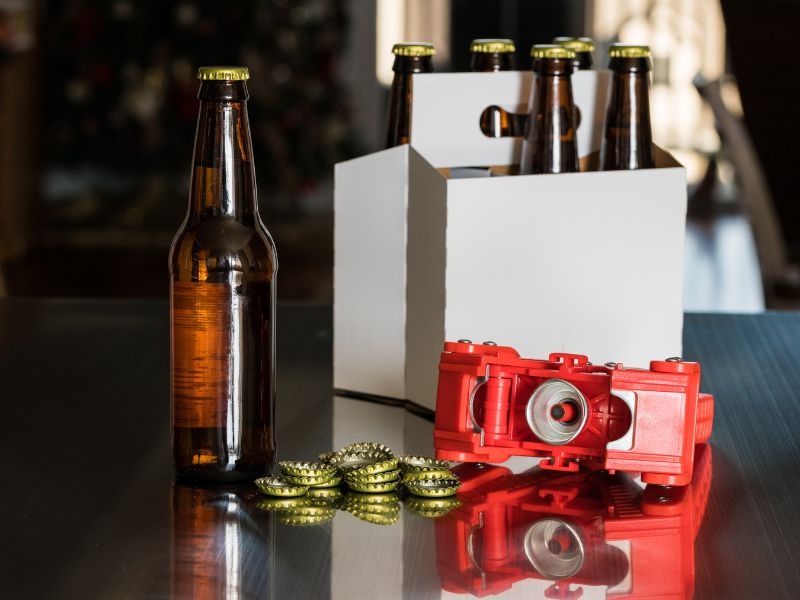
- Now, bottle the beer and secure a cap on each one. Depending on the amount of sediment, you can get 24 to 26 bottles of beer from this recipe. Place the bottles in the same cool, dark place you put the fermenter for at least two weeks to a month. I tried a test bottle at fifteen days and found it reminded me of a Newcastle Brown Ale. Tasty, but not yet a porter. I tried another test bottle in another two weeks, and it was much better. Two weeks after that (a total of six weeks), and I had a very good honey porter.
Next up in the Get Your Brew On series, getting the right equipment and proper cleaning to prevent skunky beer and possible food poisoning!
Explore More with My Military Lifestyle and Crafts!